
Bridgewater Previous Residents Sources
Previous residents research works best as a dated stack of records. The Bridgewater assessor and Bridgewater parcel map establish the present parcel. Plymouth County Registry of Deeds records for Bridgewater establish recorded title. Bridgewater street lists, directories, and census schedules provide separate clues about the people associated with an address. Each Bridgewater record has a different time span and meaning, so a name should be recorded with the source date rather than treated as a continuous residency claim.
| Source | Local years available | Where held | What it can establish |
|---|---|---|---|
| Bridgewater TitleView historical modes | 1620-1697 Plymouth Colony; 1685-1969 historical indexes | Plymouth Registry for Bridgewater / TitleView | Recorded parties, instruments, and the legal title trail |
| Bridgewater street lists | Beginning 1927 | Bridgewater Public Library and Town Clerk | Annual names and street addresses |
| Bridgewater Greenough and Brockton-area directories | 1885; selected runs from 1902-1939 | Historic New England and State Library finding aids | Alphabetic Bridgewater household and business leads |
| Bridgewater federal and state census | Federal 1790-1950; Massachusetts 1855 and 1865 | Archives, NARA, and FamilySearch routes | Dated Bridgewater household and geographic context |
| Bridgewater Sanborn maps | 1885 through 1962, selected dates | Massachusetts State Library and Library of Congress tools | Bridgewater building, street, and adjacent-structure context |
For a recent Bridgewater question, begin with the Bridgewater assessor parcel and move to the purchase deed. For an older Bridgewater house, choose the closest street list, directory, or census year first, then use the deed chain to test whether the property description fits. Older Bridgewater land records do not share one published cutoff, so Bridgewater Registry staff and unindexed books are part of the fallback path.
Bridgewater Previous Residents Parcel Start
The Bridgewater Assessed Values database is the practical start. The Bridgewater Town guidance says it can be searched by owner, street, or street address. Save the owner spelling, situs address, mailing address, Parcel ID, assessment year, and any legal-description lead. The Bridgewater parcel situs is the physical location. A mailing address is where tax correspondence goes, which may be a post-office box, business, trustee, heir, or address outside town.
Parcel ID is especially useful because Bridgewater Town guidance says its map number appears in the Bridgewater parcel card ID. Use it with the Bridgewater AxisGIS viewer and the Town’s parcel-map instructions. GIS can supply boundaries and nearby parcel IDs, but the research did not confirm every live layer or tool label. Treat Bridgewater Assessors and the Bridgewater Registry as the authority for the current property and recorded title.
- Situs address
- The physical location of the parcel, which can differ from the address used for tax mail.
- Parcel ID
- A municipal map or parcel identifier that connects the assessment record to map research.
- Legal description
- The deed’s lot, plan, bounds, certificate, or prior-record reference. It often survives when an old street address does not.
Bridgewater Previous Residents Deed Chain
The Plymouth Registry Search Records page for Bridgewater links to Bridgewater TitleView’s recorded-land, registered-land, plan, court-number, historical grantor, and historical grantee paths. Search and viewing are free. Printing at home or the office requires a TitleView account with the published monthly, per-page, and deposit charges, so the Bridgewater Registry copy service, mail route, public terminals, and staff assistance remain useful alternatives.
TitleView distinguishes a grantor, the party conveying an interest, from a grantee, the party receiving it. A Bridgewater chain of title is the succession of recorded transfers. It is not a household list. Match the legal description, plan, parcel, or earlier book and page before deciding that a deed belongs to the Bridgewater address under review.
- Use the Bridgewater assessor result to record the current owner, situs, Parcel ID, and legal-description clues.
- Search the owner as a grantee in TitleView and narrow by Bridgewater, document date, and instrument where needed.
- Open the Bridgewater purchase deed that matches the parcel or legal description. Note each grantor, recording date, book/page or document number, and capacity such as trustee or estate.
- Search the grantor as an earlier grantee, using spelling variants, and repeat the comparison one deed at a time.
- When the indexed trail stops, use the Bridgewater Registry’s unindexed book or plan options and ask staff about historical volumes, office terminals, or copy procedures.
A TitleView search screen shows the available recorded-land search route. Its name, party-type, town, document-type, and date controls help narrow a Bridgewater result without assuming every name hit is a purchase deed.
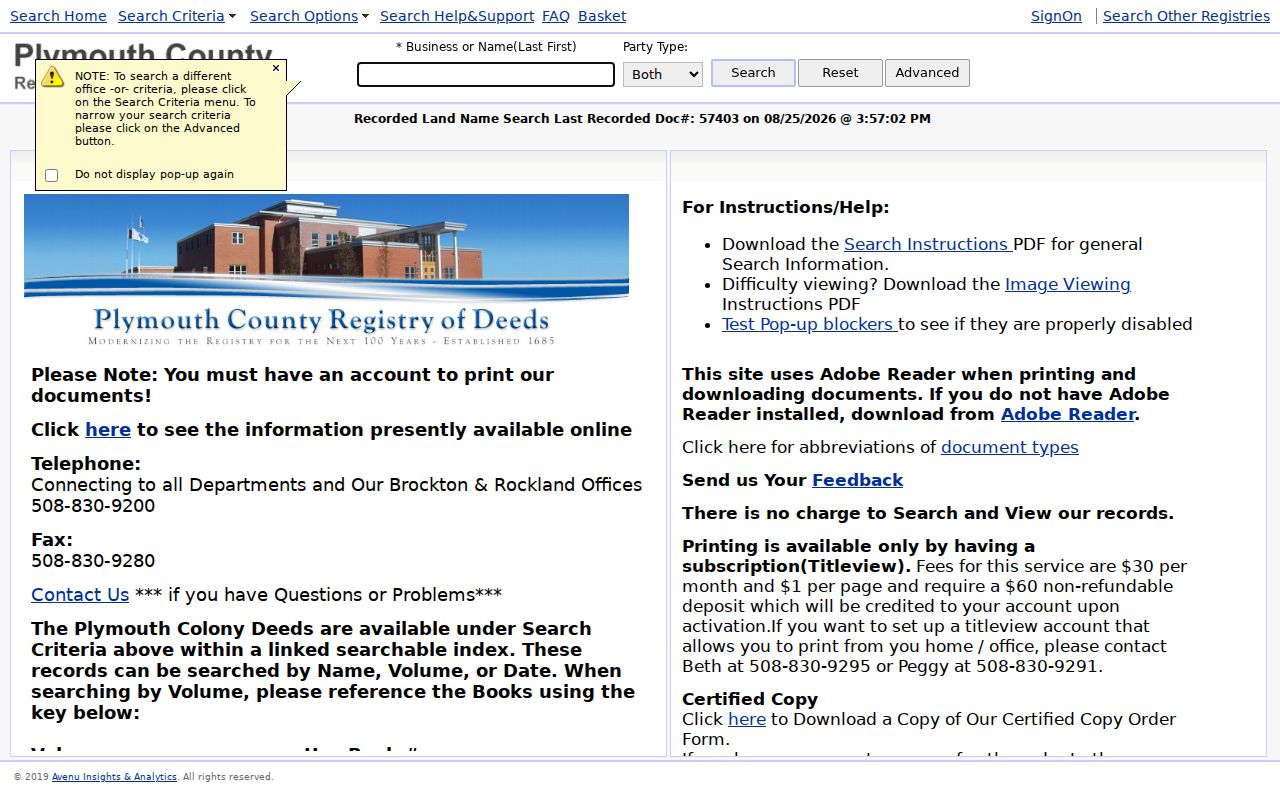
The recorded index is the title layer of a past-residents search. The underlying image and matching legal description matter more than a name alone.
Note: Registry historical labels reach back far, but the research found no one modern Bridgewater cutoff year, so confirm collection limits before relying on a gap.
Bridgewater Previous Residents in Unindexed Books
When a modern name query fails, the Bridgewater Registry offers more than one route. Its modes include Book Search, Unindexed Book Search, Date Range, Document Search, Property Search, Plans, and historical grantor and grantee indexes for 1685-1969. Plymouth Colony material has separate modes. A plan number, Land Court certificate, prior book/page, owner variant, trustee name, or metes-and-bounds description can bridge a record that lacks a familiar street address.
The Registry describes itself as the keeper of historical and modern land records from the Pilgrims to the present. That broad description does not mean every item is indexed online in the same way. The public terminals, customer service, mail copies, and research training are the documented backup channels. In 2026, the Registry listed online research-training sessions at 50 Obery Street, with registration through 508-830-9291.
Bridgewater Previous Residents in Street Lists
Title does not answer who lived at a property. For the household layer, pair the closest annual source with the closest census. Bridgewater Public Library holds street lists beginning in 1927, annual town reports beginning in 1854, yearbooks beginning in the 1920s, and local-history material. Its current Archives and Special Collections notice says the Historical Room is inaccessible to the public until further notice because of staffing cuts. Call or email the library before planning a visit, then use the Massachusetts State Library, Bridgewater State University, or Old Bridgewater Historical Society as alternatives.
- Choose a street list or directory year near the suspected move, sale, or construction date.
- Copy the name spelling, street line, occupation or firm notation, and any household abbreviation exactly.
- Check the adjacent directory year and then the closest federal census year, allowing for enumeration dates and address drift.
- Compare that household clue with the deed-chain dates, probate information, and obituary dates rather than making a date of sale stand in for occupancy.
The historical volumes themselves are described in the Bridgewater city directory resource. For a single address, their value is the dated household line, not a general list of names.
Bridgewater Previous Residents and Old Names
Bridgewater began within the larger Old Bridgewater jurisdiction. East Bridgewater, West Bridgewater, and Brockton later emerged, and historical sources may use North Bridgewater for what is now Brockton. A directory or deed result under one of those names is not automatically in modern Bridgewater. Confirm the town field, map, lot, and context before adding it to an address timeline.
For deep early research, the FamilySearch catalog identifies Bridgewater proprietors’ land records from 1672-1834, with a Town Clerk manuscript and filmed material. Access can depend on account, center, image, and privacy conditions. That record group is a land-history lead, not proof that a named party lived at a current address.
Bridgewater Previous Residents in Sanborn Maps
Bridgewater Public Library’s collection-access information describes the local-history and microfilm route for maps, annual reports, street lists, and historical books. The current access restriction means a call or email is the responsible first step before arranging in-person work.
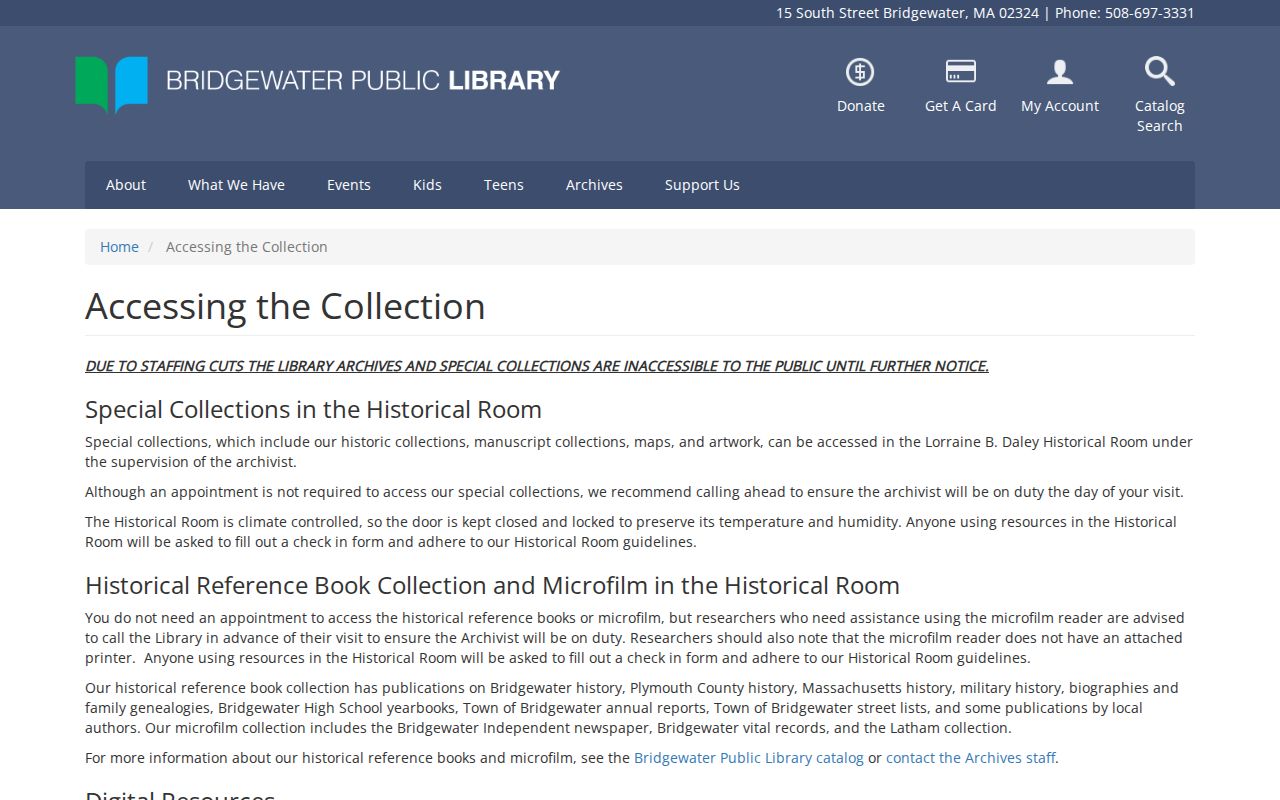
The collection provides an evidence trail around an address, even when an online parcel card or directory run is incomplete.
Bridgewater’s documented Sanborn dates are 1885, 1891, 1896, 1901, 1906, 1912, 1921, 1931, 1931-July 1943, and 1962. These fire-insurance maps can date a building footprint, use, material, adjacent structure, and sometimes a street label. They do not name every resident. Pair a map date with a street list, directory, deed, and permit rather than reading a building image as an occupancy record.
Bridgewater Previous Residents and Permits
PermitEyes covers building, electrical, plumbing, gas, trench, and certificate activity. The public route advertises open-permit viewing, but the research could not verify every result field or older archive span. For an older address, request the address and date range from Building Services through the Town’s public-records request channel. Give the department, description, and preferred electronic delivery. It is a request for existing records, not a request to create a new house history.
Obituaries and probate can close a historical trail. An obituary may supply a last-known address, relatives, or funeral-home lead. Plymouth Probate and Family Court files may identify a decedent, fiduciary, heir, and estate property. Search the MassCourts index first, then ask the clerk about the underlying file and access limits. Neither an obituary nor a probate name proves that every relative resided at the address.
Limits on Bridgewater Previous Residents
Past residents work is strongest for family history, estate questions, and the history of a house. It does not expose a complete list of every person who slept at an address. Non-owner occupants and household members may be absent from owner and deed records. Utility, delivery, RMV, protected-voter, sealed-court, and Address Confidentiality Program information are not open address sources. The Massachusetts ACP provides a substitute-address program for eligible participants under M.G.L. c.9A and 950 CMR 130.00.
Lawful use. Use Bridgewater past-residents research for house history, family history, or estate work, never to watch, harass, or harm a living person. Massachusetts law prohibits stalking and criminal harassment.