
Bridgewater City Directory Collections
Bridgewater city directory research begins with a mixed shelf, not one continuous town series. The Bridgewater Public Library has annual Town reports beginning in 1854, street lists beginning in 1927, local high-school yearbooks from the 1920s, maps, photographs, and local histories. The Massachusetts State Library's directory guide describes statewide city and town directories from 1789 through 1981, with an index that generally covers 1878-1937. Use its holdings information to verify a particular Bridgewater volume before treating a year as complete.
| Bridgewater collection | Bridgewater years or publisher | Bridgewater holding | Bridgewater access |
|---|---|---|---|
| Bridgewater street lists | Beginning 1927 | Bridgewater Public Library and Town Clerk | Historical Room access is currently restricted by staffing notice |
| Annual Town reports | Beginning 1854 locally; 1847-2020 at BSU | Library and Bridgewater State University Virtual Commons | Digital reports where scanned, plus local reference holdings |
| Greenough's Brockton directory | 1885, Edwin A. Greenough & Co., 643 pages | Historic New England, call number F74.B8 B76 1885 | Collection record online; inspect the volume for entry details |
| Brockton-area directories | Selected 1902-1939 runs, with listed missing years | State Library holdings and directory finding aids | Confirm that the volume includes Bridgewater, East Bridgewater, or West Bridgewater |
| Bridgewater Independent | Exact run not located | Library microfilm | Ask staff about dates and copies; the reader has no attached printer |
The 1902-1939 Brockton-area finding aid has gaps, including 1920, 1923, 1928, 1934, and 1938. It is a useful lead, not proof that every listed volume has Bridgewater entries. The final printed year of a Bridgewater-specific directory was not located in the research.
Note: Treat every volume as a year-specific snapshot and record the publisher, place coverage, and page before making a family-history conclusion.
Bridgewater City Directory Shelf Access
The Lorraine B. Daley Historical Room is the central local shelf for city directory work. Its collection includes Town reports, street lists, yearbooks, maps, photographs, published Bridgewater and Plymouth County works, vital-record microfilm, Bridgewater Independent microfilm, and the Latham collection. Earlier access instructions describe a reader, check-in procedure, and reference help. The current access condition is more important: Archives and Special Collections are inaccessible to the public until further notice because of staffing cuts.
The Library's archives page documents the collection and its current notice. Call or email before making an in-person plan. When the Historical Room cannot be used, the practical fallback chain is the Library's research staff, Bridgewater State University digital collections, the Massachusetts State Library, the Massachusetts Archives, and the Old Bridgewater Historical Society. An in-library or library-Wi-Fi session may also provide Ancestry Library Edition and FamilySearch access, subject to license rules.
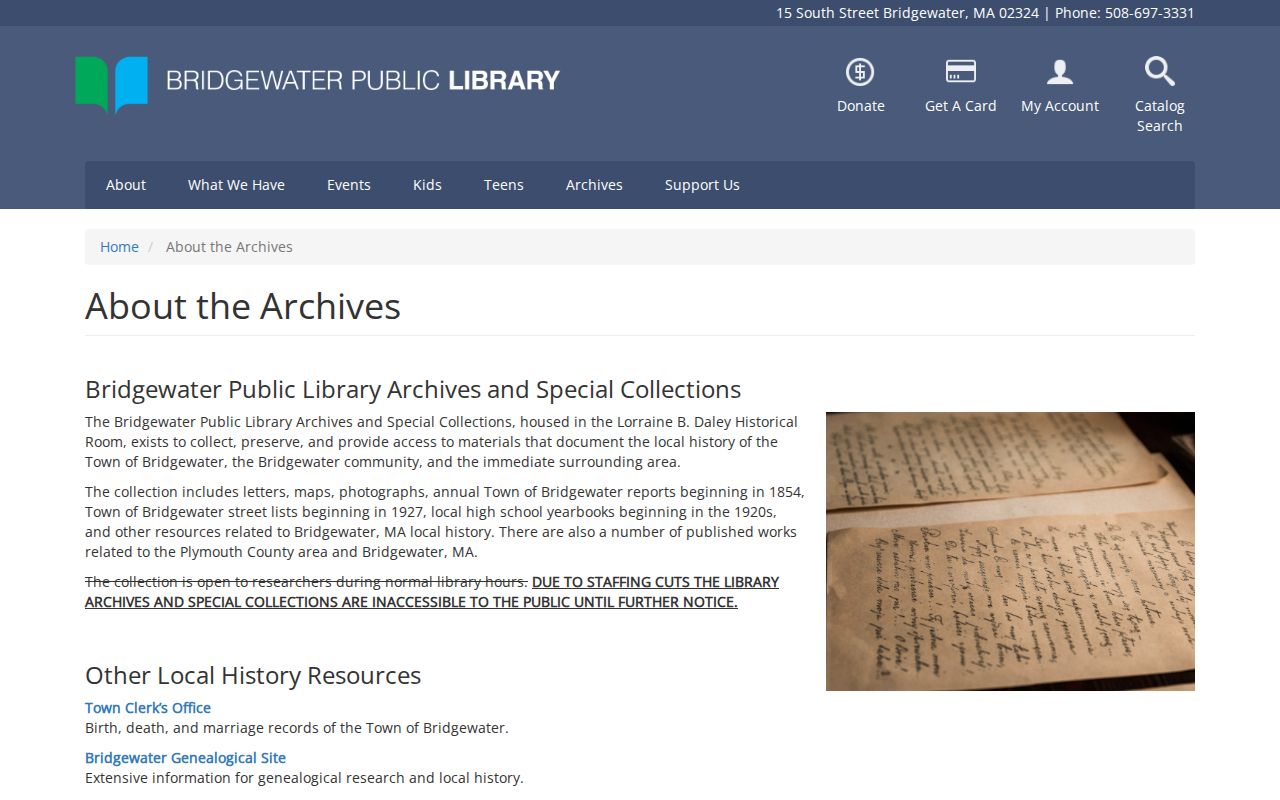
The archive notice is a key access fact for a Bridgewater city directory search because the strongest local shelf may require a different research route for now.
Reading a Bridgewater City Directory Key
Greenough's 1885 Brockton directory is a concrete Bridgewater city directory lead. Historic New England identifies the edition as a 643-page work published by Edwin A. Greenough & Co. in Boston, and its place coverage includes Bridgewater, East Bridgewater, and West Bridgewater. The inspection did not reliably capture an actual Bridgewater entry, so the fields below distinguish what the directory key supports from details that must be read from a particular page.
| Bridgewater person name | Search the Bridgewater alphabetic section using exact spelling and variants. Initials and middle names can matter. |
|---|---|
| Bridgewater widow notation | wid. marks a Bridgewater widow in the Greenough key. Preserve the abbreviation as printed. |
| Bridgewater street line | The Bridgewater key omits the word “street” after a street name. A missing word is a convention, not a missing address. |
| Bridgewater firm or factory | When printed immediately after a name, the Bridgewater key says it identifies the business place. It does not automatically prove a home address. |
| Bridgewater unverified details | Bridgewater occupation, Bridgewater household notation, spouse notation, and residence wording must be transcribed from the actual entry when visible. |
Historic New England's collection record is the source for the edition and call number. Photograph or transcribe the volume's abbreviation key before copying an entry, especially where an apparent address could be a business location.
- Criss-cross directory
- A reverse section arranged by street or address, used to move from a location to a listed name or business.
- Householder index
- An arrangement focused on heads of household, which may omit other people in a home.
- Abbreviation key
- The publisher's explanation of shortened marks. It must be read in the same edition as the entry.
Note: A city directory entry is evidence of what the publisher printed for that year, not legal proof of residence or ownership.
Bridgewater City Directory Year Runs
Directory coverage around Bridgewater is uneven but still useful. The named 1885 Greenough directory gives an early Bridgewater-area lead. An authorized holdings index identifies Brockton-area runs for 1902-05, 1906-09, 1910-12, 1913-14, 1915-16, 1917-18, 1919-21, 1922-26, 1927-30, 1932-35, and 1936-39, with the stated gaps. Several runs include Bridgewater, East Bridgewater, and West Bridgewater, but a researcher must verify each volume's place coverage.
Those city directories do not replace Bridgewater's annual street lists, which begin in 1927, or its annual reports, which begin in 1854. Federal census schedules are public from 1790 through 1950 under the 72-year rule, and Massachusetts state censuses for 1855 and 1865 add earlier household context. Allow a year or two of drift between a directory issue, census enumeration date, and a move.
- Find the surname in the earliest confirmed Bridgewater-area directory, preserving spelling, notation, address, and page.
- Check the next available directory issue instead of assuming an annual run exists.
- Compare the address with a Bridgewater street list once the 1927-and-later period is reached.
- Pair directory years with the nearest federal census, then use the 1855 or 1865 Massachusetts census when relevant.
- Use a deed, obituary, Probate file, or Town report only for the separate fact it can confirm.
A person leaving a directory may have moved, died, changed spelling, been omitted by the publisher, or appeared under another town label. The date sequence, not a single missing entry, helps distinguish those possibilities.
Bridgewater City Directories and North Bridgewater
Bridgewater city directories need a historical map in mind. The original Old Bridgewater jurisdiction later divided into East Bridgewater, West Bridgewater, and Brockton. North Bridgewater is the historical name associated with Brockton, not a present-day Bridgewater neighborhood. Older catalog records, deeds, church registers, census records, and directory headings can therefore use a town name that differs from the current location.
This is a Bridgewater records story, not a mere filing detail. Search the historical town name as a second route, then compare the source date, address, Registry town field, and map context. Do not merge present municipalities just because they share the earlier jurisdiction. The Old Bridgewater Historical Society holds family, cemetery, church, town, and collection leads across that former township.
The Old Bridgewater Historical Society provides the appropriate contact route for original-township context and research-service questions.
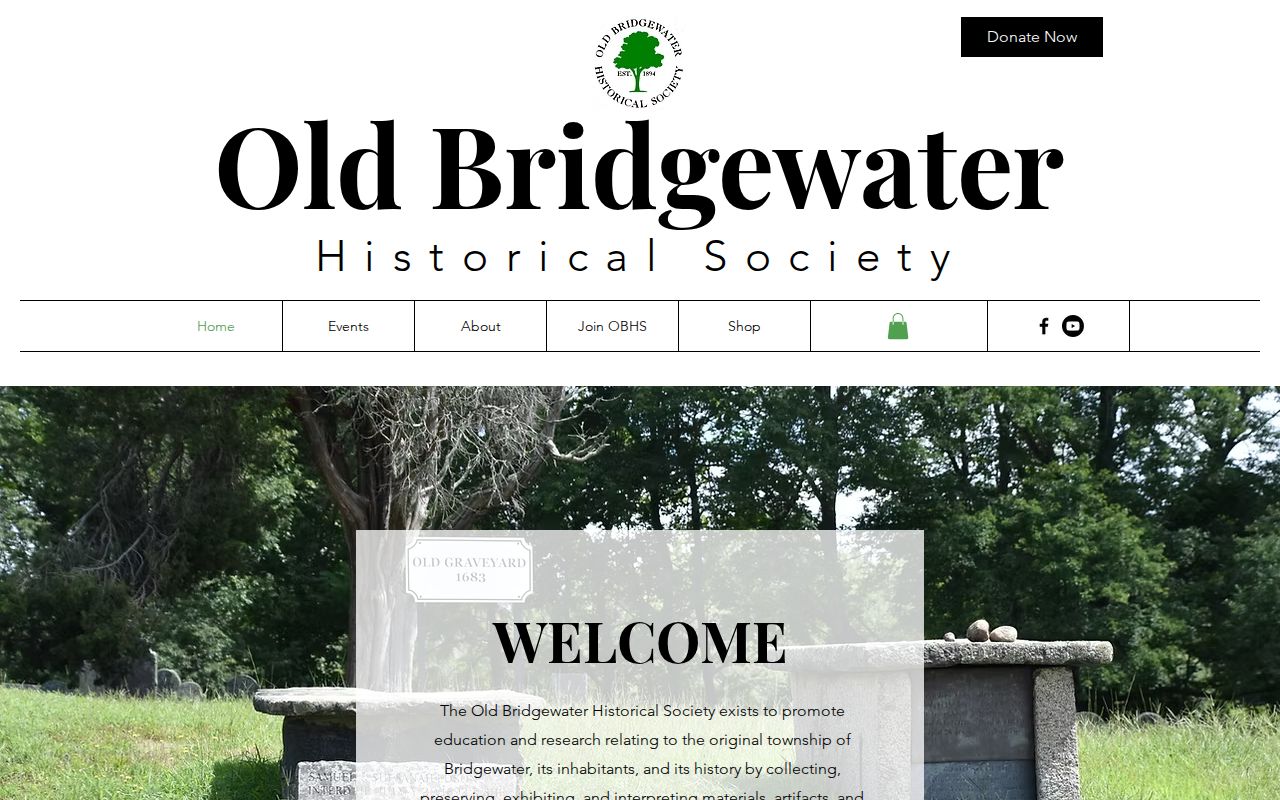
The historical society image points to a records source that can resolve an older place name before a directory disappearance is treated as a dead end.
Bridgewater City Directory Place Images
Names in a city directory become more useful when placed beside a dated street, building, or institution. Bridgewater State University's Virtual Commons holds annual Town reports from 1847-2020, local histories, images, and Dr. Benjamin A. Spence research on education, churches, stores, manufacturing, fire service, law and order, transportation, and more. The image collections include Central Square, the railroad station, Town Hall, Town River, the Perkins Foundry, schools, churches, and named houses.
Bridgewater State's digitized image collection is a source for checking a landmark caption, date, and place. Match an image with a directory, assessor parcel, Registry instrument, or town report. A historical image identifies context; it is not a current resident list.
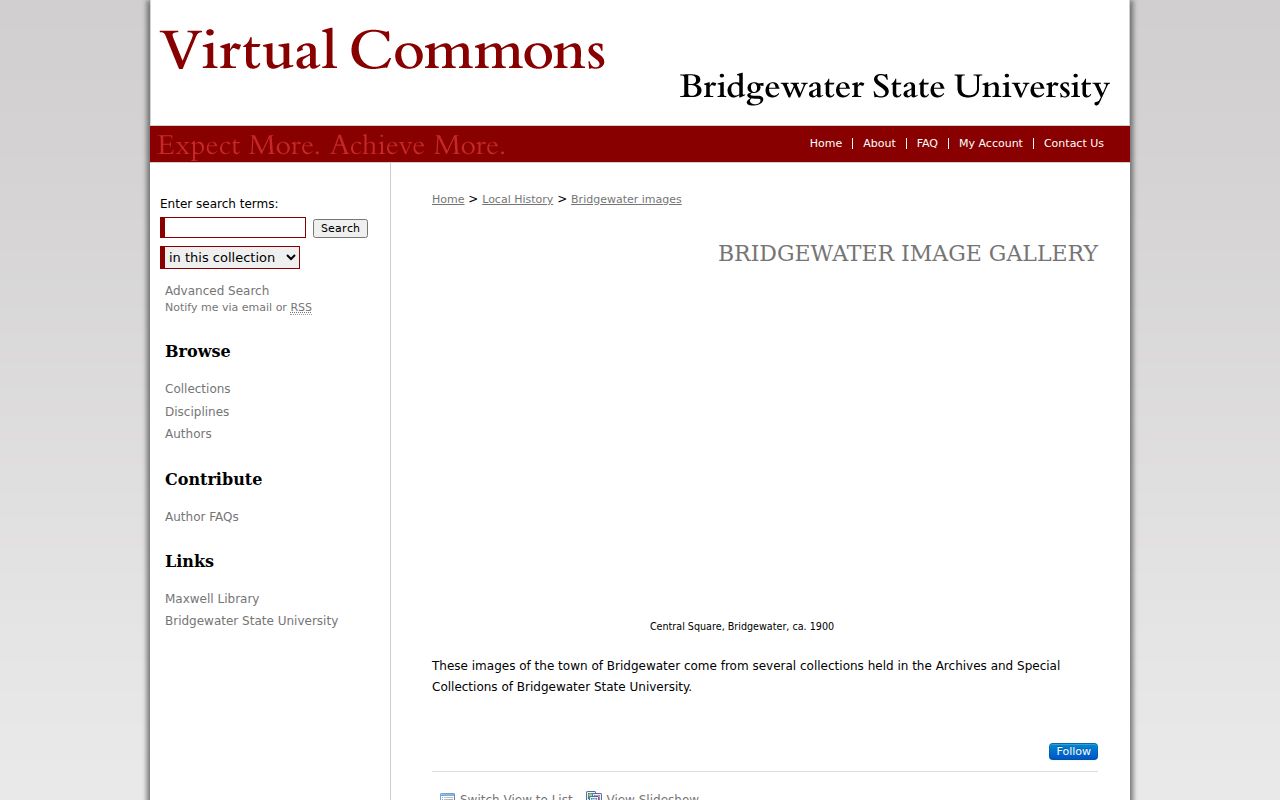
Using the image with a directory year and an address source can clarify whether a listed place was a home, store, factory, school, or public building.
The Virtual Commons local-history collection also supplies digital Town reports and research collections that bridge gaps between directory issues.
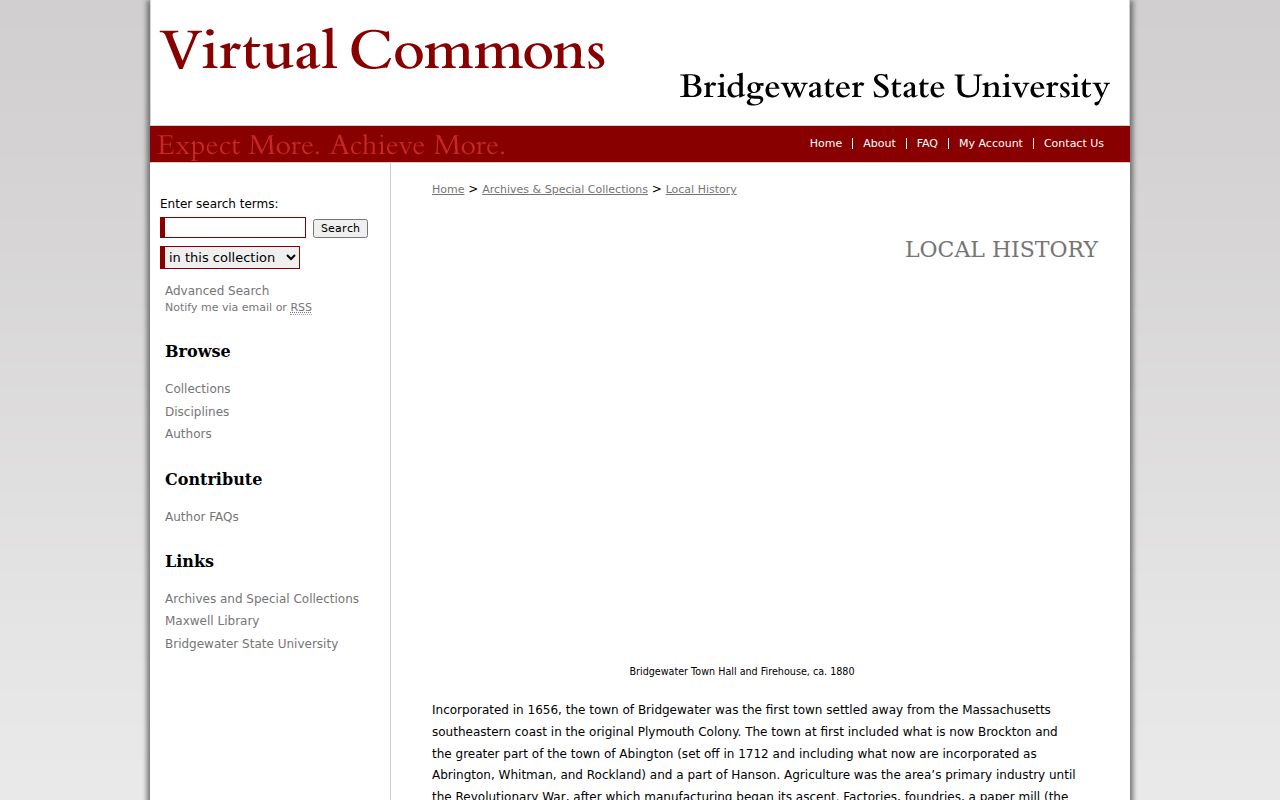
The digitized local-history collection gives a remote alternative when the Library's Historical Room cannot be visited.
Trace a Bridgewater City Directory Household
Follow a household through a Bridgewater city directory one edition at a time. Begin with the alphabetic entry, then keep the exact surname form, address, business or factory clue, and any abbreviation. If an address guide or criss-cross volume exists for the same year, use it as a lead and verify the volume's own key. Pair the directory with street lists, census schedules, annual reports, maps, and a recorded deed only when each source addresses the question at hand.
For modern address-keyed ownership and parcel work, use the Bridgewater Street Directory records chain rather than rebuilding it from historical books. If a historical name needs confirmation in current public indexes, the Bridgewater Resident Lookup route keeps that one-person task separate from the collection search.
Directory evidence is strongest when the name, street, source date, and a second independent record agree. A deed can show title, a census can show an enumerated household, a street list can show a municipal snapshot, and an obituary or Probate file can document a later family event. Each record should retain its own date and limit.
Bridgewater City Directories for Classmate Trails
A former classmate search is one humane use for the historical shelf. Bridgewater Public Library yearbooks begin in the 1920s, while Bridgewater State University collections, Library newspapers, annual reports, and local histories can add context. Start with an old yearbook or directory entry, then use a dated Town report or newspaper microfilm to confirm the period. Do not treat a historical match as a current address or contact record.
Bridgewater Public Library's research-database page describes in-library and library-Wi-Fi access to FamilySearch and Ancestry Library Edition, along with newspaper resources. The Library's bridge between a person, a school, and a year is especially useful when city directory coverage has a gap.
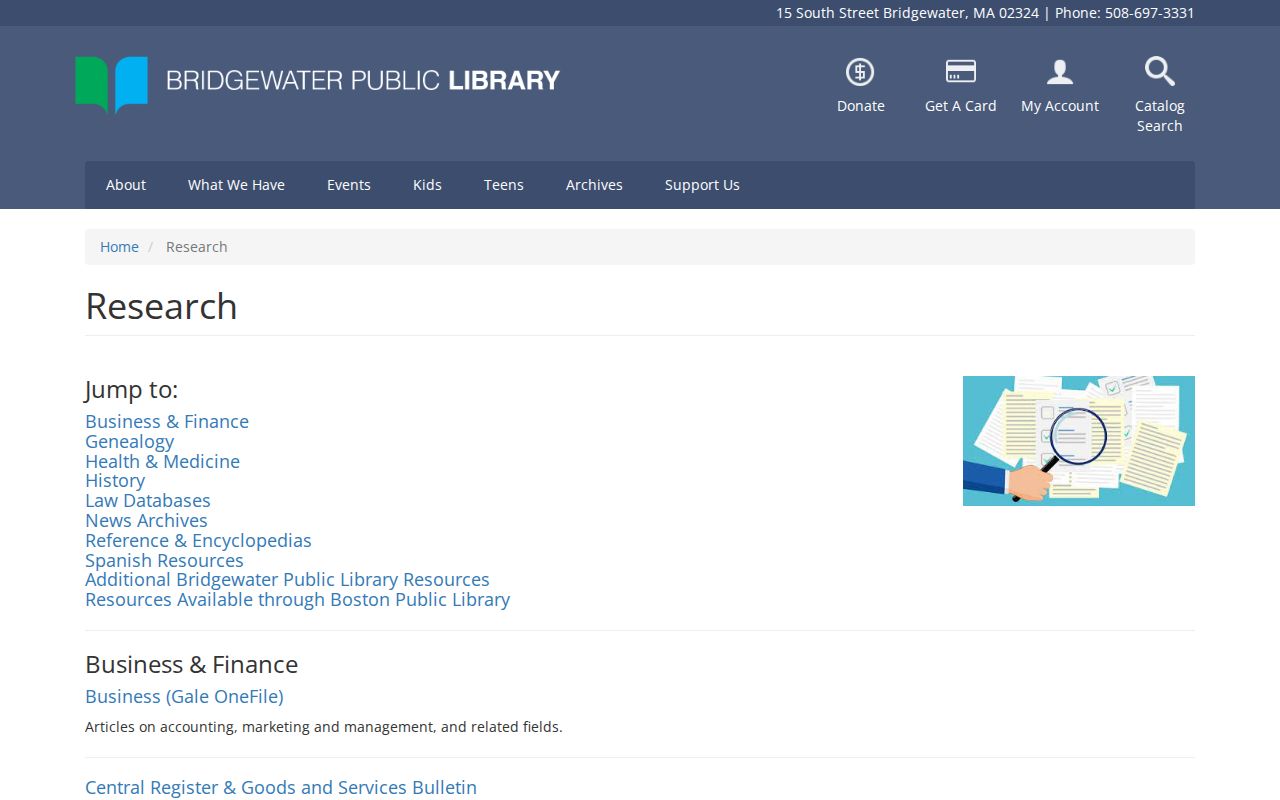
These licensed databases are access channels through the Library, not guaranteed at-home collections or a substitute for reading the original local record.
Note: Confirm current access rules with the Library before traveling or relying on an in-library database session.
Bridgewater City Directory Boundaries
City directories, street lists, census schedules, deeds, voter records, and assessment cards do not mean the same thing. A Bridgewater city directory is a publisher's dated listing. A street list is a municipal snapshot. A census is a decennial enumeration. A deed is recorded title evidence, and an assessment is tax-roll ownership evidence. Keeping those distinctions prevents a strong historical find from being overstated.
Use institutional collections for public contacts and historical context. Do not reproduce private membership rolls or residential addresses from clubs, congregations, or other restricted records. The right next step for a missing or restricted record is to ask the custodian about a lawful access route, not to infer the contents from a directory gap.